2024-2025 CKR Manhae Prize Winners Announced
The 2024-2025 CKR Manhae Prize awarded to Lauren Elise Subramaniam ('25) and William Sung ('25)
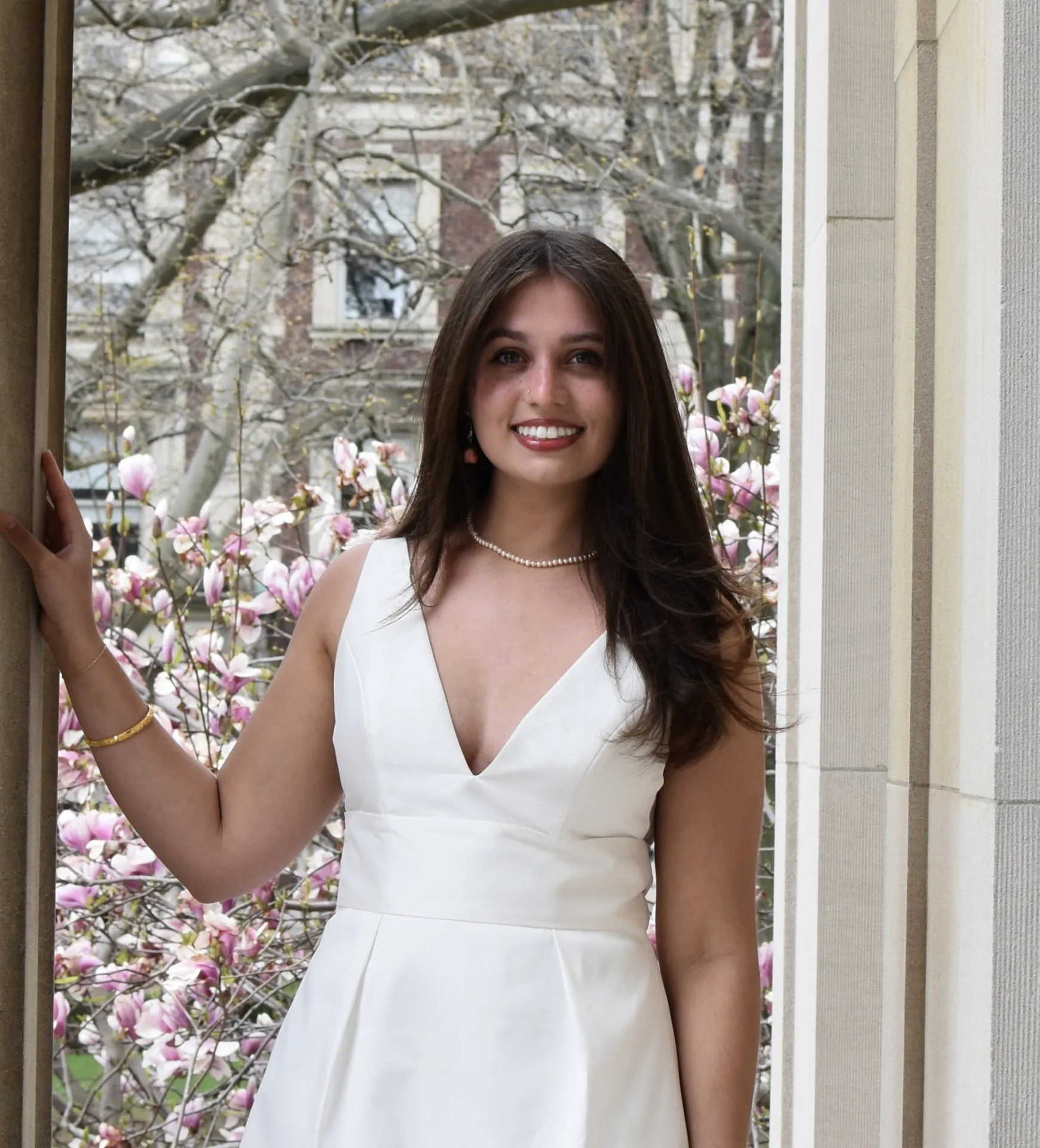
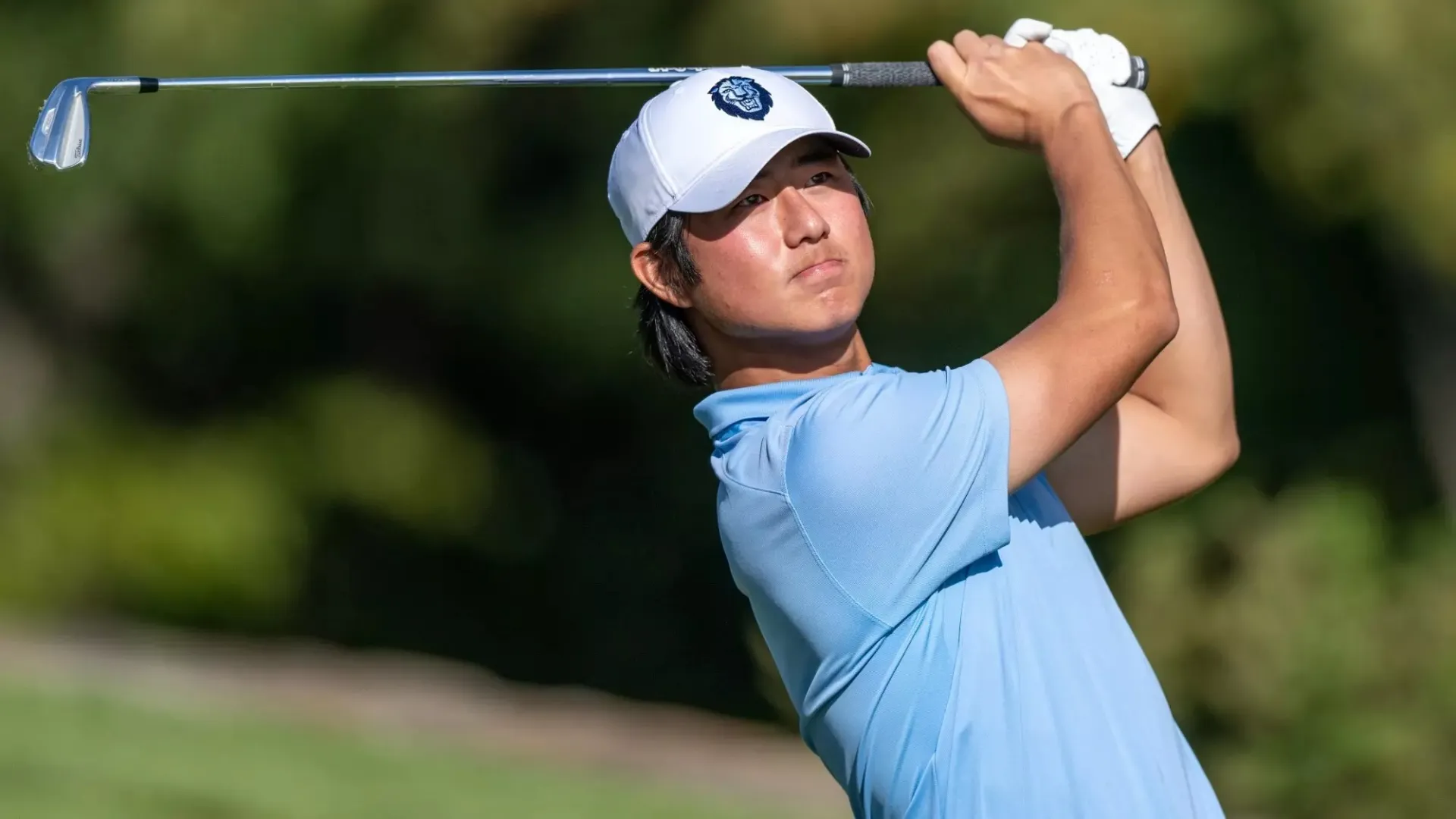
The Manhae Prize for Korean Language has been awarded to an outstanding undergraduate student in the Korean language program every year beginning in 2015. The recipient will receive the prize and an award certificate. The criteria for this prize are as follows.
An undergraduate student who:
1) has taken Korean courses at Columbia for at least three years.
2) has shown steady improvement in language skills.
3) has received an average of B+ or above in Korean language classes.
This year, two undergraduate students received the Manhae Prize, Lauren Elise Subramaniam (Environmental Biology, CC ’25) and William Sung (Economics, CC ’25). We spoke with them about their journeys learning Korean. Though they come from very different academic backgrounds—one a budding scientist researching mosquito neurobiology, the other a varsity athlete and Economics major—they each found unique and meaningful reasons to study the language.
Lauren Elise Subramaniam ('25)
Could you start by introducing yourself and telling us about your major and how you first began learning Korean? Were there any experiences or influences that inspired you?
It’s kind of a funny story because I’m not an EALAC (East Asian Languages and Cultures) major—I actually just graduated in 2025 with a degree in Environmental Biology. I first started studying Korean during COVID. Back in middle school, I had friends who were really into K-pop, and they tried to teach me the Korean alphabet. I picked up a few letters but gave up pretty quickly.
In high school, I studied Latin, so when I got to Columbia, I knew I wanted to try a spoken language. During the shopping period, I was actually enrolled in both Korean and Japanese. Japanese has three writing systems, while Korean has one—and I already knew a few Korean letters. The Korean professor was also really kind, and something just told me to go for it.
I also liked how our Korean class jumped right into learning vocabulary in Korean itself. It was a steep learning curve, but it helped a lot. In Japanese, we were learning vocabulary in English (Romanized), which made it harder to later connect it back to the native script.
What were some of the biggest challenges you faced while learning Korean?
Oh, definitely. Since I didn’t grow up with any Korean, it was really tough. Latin felt easier because it used the same alphabet as English. Even though I’m a STEM major, Korean was one of the hardest courses I took at Columbia. I had to study twice as much as for my science classes—just writing the characters took hours of practice in the library.
Did you take any other Korea-related courses besides language?
Yes. After my first year of Korean, I studied abroad at Yonsei University in Seoul. There, I took classes on modern Korean art, modern Korean history, East Asian philosophy—and continued Korean language classes.
Could you tell us a bit more about your experience at Yonsei?
Honestly, my semester at Yonsei was probably my best semester at Columbia. The classes were fascinating, and I loved how my history and art courses complemented each other—we’d study an era in history class and then see how it was reflected in the art from that period.
I also got to travel a lot. We went to Busan twice, and also visited Daegu, Gwangju, and Jeju Island. Daegu was one of my favorites—we rode swan boats on a lake and had amazing tteokgalbi. Jeju was hilarious because my friend accidentally booked a hotel on the quiet side of the island, far from any tourist areas. Locals kept asking why we were staying there—but it made for such a unique and memorable experience.
Do you plan to continue studying Korean after graduation?
Yes! I actually asked Yi Hyunkyu seonsaengnim (teacher) to continue tutoring me after graduation. I’ve been studying Korean for three years now, and I want to keep going until I’m close to fluent. I even signed up for the TOPIK exam this August.
Given the current situation with science funding in the U.S., I’m also thinking about pursuing a master’s degree in environmental biology in Korea—maybe at Seoul National University or Yonsei. It would be challenging, but I know that speaking Korean would be a huge asset. Some Korean scholarships are also tied to TOPIK proficiency, which is motivating.
Could you share more about your interest in environmental biology, and why you’d like to study it in Korea specifically?
Right now, I work in a mosquito neurobiology lab, studying mosquito mating behavior. It’s actually very relevant to Korea—some mosquito species from Asia, like the Korean bush mosquito and Japanese bush mosquito, are becoming invasive in other regions. Scientists are paying more attention to them, so it would be fascinating to study local mosquito species in Korea directly.
What advice would you give to other students thinking about learning Korean?
If you’re considering it, definitely try it. It’s been one of the best parts of my Columbia experience. Learning Korean can be really challenging, especially if you don’t have a family background in it, but the friends I made in class and the sense of community kept me going. We studied together and encouraged each other—it’s one of the most supportive groups I’ve found here.
Do you have any favorite Korean films or TV shows?
This is a little embarrassing because they’re kind of old, but Boys Over Flowers and Strong Girl Bong-soon were fun. I really loved Love in the Big City—it’s an adaptation of a novel, and it tackles a lot of contemporary social issues, including queer representation. After spending time in Korea, I can see that attitudes around identity are starting to shift, and that show captures that really well.
I also saw Past Lives, which I thought was beautiful.
William Sung ('25)
Tell us a little bit about yourself.
I’m an Economics major at Columbia College, and I’ve spent the past four years on the men’s golf team, which has been an incredibly meaningful part of my college experience. Outside of golf and academics, I love being outdoors, exploring new restaurants around the city, and finding different ways to stay active.
How did you get into learning Korean? Were there any specific experiences or influences that sparked your interest?
My family is Korean, but growing up, I was never very confident in speaking the language. I was actually one of the few in my extended family who wasn’t at least conversationally fluent. Over time, I realized how much I wanted to connect more deeply with my grandparents, who don’t speak English.
I felt like I had so much more of myself to share with them—my thoughts, my personality, even just everyday conversations. That desire really motivated me to start learning Korean more seriously.
How long have you been studying it? What has your experience been like? Were there any challenges?
I began studying Korean seriously when I enrolled in First Year Korean at Columbia. Initially, it was just a requirement I had to fulfill. But as the semester went on and I started seeing real progress—especially when I could talk more comfortably with my grandparents—I became much more invested.
One thing that helped a lot was being able to practice with my parents, who are fluent in both Korean and English. They could explain things in ways that made sense to me. Of course, there were challenges with grammar and vocabulary at times, but having that personal connection to the language kept me going.
Do you plan to continue studying Korean? Will you be pursuing a career that uses your skills in the language?
I don’t plan to study Korean in an academic setting going forward, but I definitely plan to keep using it in my daily life. Whether it’s with my family, friends, or the Korean community I’ve gotten to know, I want to continue building my fluency through conversation.
What are some of your favorite Korean TV shows, films, books, or artists?
Some of my favorite Korean shows and films include My Mister and Ode to My Father. I really enjoy how Korean media can be so emotionally deep and relatable. There’s a unique kind of storytelling in Korean dramas and films that I’ve come to really appreciate.
Any advice for those who are thinking about learning Korean?
Korean is a fun and rewarding language to learn. The grammar can feel tricky at first, but the sentence structure becomes more intuitive over time. Plus, the culture is incredibly rich—there’s so much to enjoy and explore beyond just the language itself. Start with basic phrases, stay consistent, and don’t be afraid to make mistakes!
Anything else you’d like to share about your experiences and future goals?
Learning Korean has helped me feel more connected to my family and my cultural roots, and that’s something I’ll always carry with me. Looking ahead, I hope to continue building those relationships—whether that’s with relatives, friends, or new people I meet in the Korean community.