2025-2026 CKR Manhae Prize Winners Announced
The 2025-2026 CKR Manhae Prize awarded to Adam Goldstein (‘26) and James Mitchell Dees (‘26)
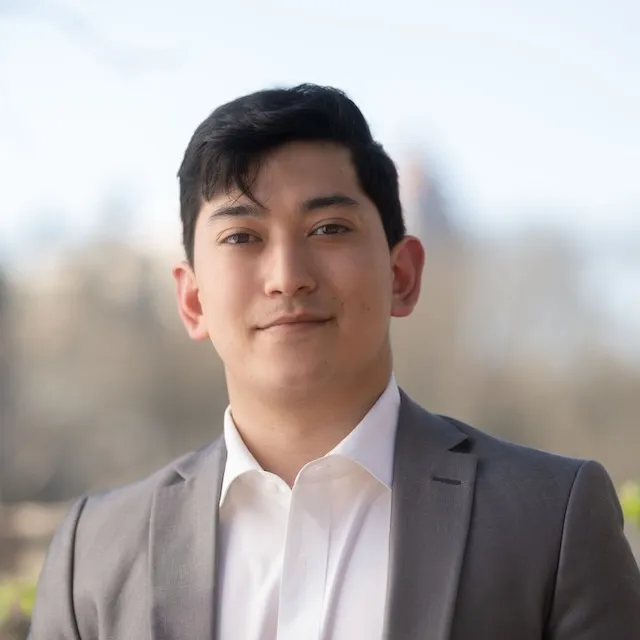
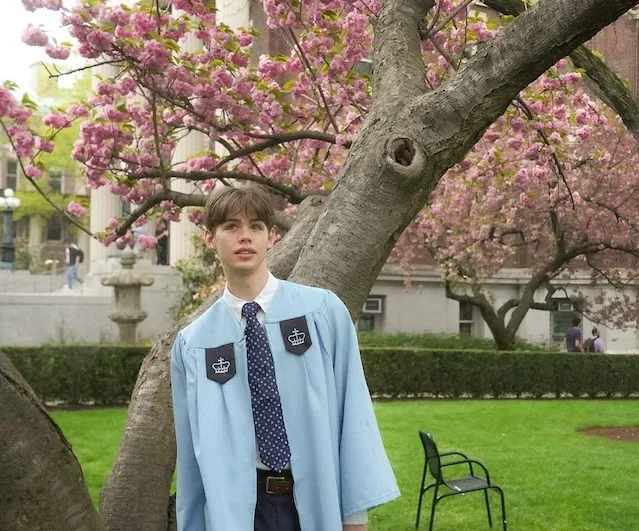
The Manhae Prize for Korean Language has been awarded annually since 2015 to an outstanding undergraduate student in Columbia’s Korean language program. The prize recognizes students who have demonstrated sustained commitment to studying Korean, steady improvement in their language skills, and strong achievement in their Korean language coursework. Recipients receive the Manhae Prize and an award certificate.
This year, two undergraduate students received the Manhae Prize: Adam Goldstein (History, CC ’26) and James Mitchell Dees (Neuroscience and Behavior, CC ’26). Though they came to the study of Korean from very different places, both found that learning the language became about much more than acquiring a new skill. For Adam, studying Korean offered a way to reconnect with his Korean heritage and strengthen his relationship with his mother. For James, an early interest in Korean popular culture grew into a deeper engagement with Korean language, history, culture, and perspectives on medicine and healthcare.
We spoke with Adam and James about their experiences learning Korean at Columbia, the people and experiences that shaped their studies, and how they hope to carry the language with them beyond graduation.
Adam Goldstein (‘26)
Could you start by introducing and telling us a little bit about yourself?
I just graduated as a History major, focusing on European history. I grew up mostly in the suburbs of Washington D.C., although my family moved around quite a bit because my father worked for the U.S. State Department. My mother is Korean, and my parents actually met while my father was on an assignment in Korea. That family connection inspired me to study Korean.
How and when did you begin learning Korean? What motivated you to choose to study Korean?
Even though I am of Korean descent, I actually didn’t grow up speaking Korean. When I first came to Columbia University, I studied Italian. After taking a leave of absence, I decided to switch to Korean because I wanted to reconnect with my heritage and become closer to my mom, especially after my father passed away.
What is your favorite Korean word or phrase?
I’d probably choose seonsaengnim (선생님) which means teacher or professor. It’s one of the very first words you learn in Korean, and it’s also probably the word I’ve said most often throughout my classes. It reminds me of the three incredible Korean instructors I’ve had at Columbia and my great classroom experiences.
What are some of the most memorable experiences or biggest challenges during your Korean studies?
One of my favorite moments was surprising my mom with a Mother’s Day card written entirely in Korean. She had absolutely no idea I was studying Korean. Originally, I had hoped to surprise her for her birthday in February, but after only one semester I knew I wouldn’t be able to write all that I wanted to convey. So I spent another semester studying, and with help from Korean teaching assistants, friends, and my instructor, I wrote her a heartfelt message in Korean. My handwriting still wasn’t very good, so I typed and printed the note and placed it inside a typical Hallmark card.
We gave it to her right before my wedding, when our whole family was together. Everyone except my mom knew what was happening, so seeing her reaction made it one of the most meaningful moments of my entire Korean-learning experience.
The biggest challenge was probably finding the actual time to practice. I was working four jobs while also taking classes. I had Korean classes Monday through Thursday, so by Thursday I would feel comfortable with the week’s material, but then I would lose some of that fluency over the weekend—every Monday felt like I was taking a small step backward. That’s one reason I make a point of practicing Korean with my mom regularly. I think the daily practice helps keep the language fresh.
Has studying Korean influenced the way you think?
Absolutely. It accomplished exactly what I hoped it would. I feel much closer to my Korean heritage and much closer to my family, especially my mother. Being able to communicate in a shared language has strengthened our relationship in ways I didn't expect.
It's also made me appreciate how important it is for children to learn their family's language when they're young. My parents both spoke Korean, but after my older sister was bullied for speaking it as a child, they decided not to teach me. By the time I was older and they wanted to teach me, I was too stubborn and didn't want to learn which I regret. Learning Korean later in life made me realize how much cultural connection can be lost when you don't grow up with your heritage language.
Did you take any Korea-related courses besides language classes?
Yes. I took Making Modern Korea with Professor Ruth Barraclough, and it ended up being a really personal experience. After nearly every class, I would call my mom and talk with her about the lecture and the readings. We'd discuss her own memories and what it was actually like to live through some of the historical events we were studying.
How do you plan to continue using Korean in the future?
I don't think I'll continue studying it formally or work with a tutor, but I'll definitely keep speaking Korean with my mom and with Korean friends. I've already noticed how quickly language skills fade. I took a one-week vacation after graduation, and even that has made me feel less confident.
Although I’m not taking any further courses, I think Korean has really become part of who I am. Whether it's talking with my family or simply ordering Korean barbecue in Korean, it makes me feel more connected to my heritage.
What are some of your favorite Korean shows or artists?
My wife was actually a K-pop fan long before I started studying Korean, so she introduced me to some K-pop. One of the first groups I really became familiar with was TWICE, and they are probably still my favorites.
As for television, Squid Game was probably my first Korean drama. Unfortunately, when I watched the second season during my Korean studies, I realized I understood almost nothing. But over time, I've noticed I can recognize more and more without subtitles, which has been really rewarding and fun.
What advice would you give to students considering learning Korean?
Spend plenty of time practicing both reading and speaking. At first, it's easy to focus only on sounding out Hangul instead of actually understanding what you're reading. I found myself rereading sentences because I was focusing on decoding the sounds rather than processing the meaning.
If you can train yourself to read for comprehension from the beginning—not just pronunciation—it makes speaking much easier later on. I think developing that habit early really pays off.
James Mitchell Dees (‘26)
Could you start by introducing yourself and telling us a little about yourself?
I just graduated with a degree in Neuroscience and Behavior and a concentration in East Asian Studies. I grew up mostly in Georgia, although I spent part of high school and college in Wisconsin before moving back to Georgia. Right now I'm applying to medical school, and I'm hoping to specialize in psychiatry.
How and when did you begin learning Korean? What inspired you to study it?
My first exposure to Korean was in high school through K-pop. I came across it on social media and quickly became fascinated. After getting into the music itself first, I then became interested in the choreographies and variety shows.
At first I couldn't understand anything, which made me curious about the language. When I came to Columbia, I finally had the chance to study Korean, and I ended up taking it for three and a half years.
What is your favorite Korean word or expression?
My favorite word is kkot (꽃), which means "flower." I just enjoy writing and saying it. Flowers have always been something I like to surround myself with, and I think the symbolism they carry is really beautiful. It's a simple word, but one I've always liked.
What were some of the highlights and challenges of learning Korean?
The people made the biggest difference. Most of my Korean classes only had five to ten students, so we developed really close relationships with both our classmates and professors. Professors Beom Lee and Hyunkyu Yi, especially in Business Korean, were incredibly supportive and approachable. They genuinely wanted students to succeed, and you could always talk to them about anything.
Some of my closest friendships at Columbia actually came from Korean classes, and I still keep in touch with classmates even after my graduation this spring.
The language itself was definitely challenging. Because English is the only language I grew up speaking, Korean grammar felt completely unfamiliar at first. Over time, though, it has started to feel more intuitive.
The next hurdle was speaking naturally. It's one thing to know grammar and vocabulary, but another to stop translating every sentence from English in your head. Learning to think directly in Korean takes a lot of practice, and I’m still working on that.
Has studying Korean changed your perspective in any way?
Definitely. As someone planning to become a physician, learning Korean also introduced me to different ways of thinking about medicine and healthcare. Language is deeply connected to culture, so studying Korean led me to think more about cultural competency and how different communities approach health. That's something I hope to carry into my future medical career.
Did you take any other Korea-related courses?
Yes. I took Narrating Premodern Korea with Professor Jungwon Kim where we studied historical texts and learned about the lives of upper-class women in premodern Korea.
The course also introduced me to traditional East Asian medicine and how it intersects with Western medicine. I think it’s really important for physicians to understand patients' cultural backgrounds, and that course really helped reinforce that idea. No matter what specialty I eventually practice, I'll be working with people from many different backgrounds, and studying Korean has helped broaden my perspective.
I also took EALAC’s Colloquium on Major Texts where we read some works by Korean authors, which further deepened my understanding of Korean literature and culture.
Do you plan to continue studying Korean?
Yes! I haven't taken a Korean class for a full semester now, and I've already noticed myself forgetting some things. I’m planning on self-studying Korean during my gap year before medical school.
Some of my Korean friends have already offered to practice conversation with me, and I'd also like to prepare for the TOPIK exam to see where my language skills currently stand.
Eventually, I hope I can use Korean in a medical setting and communicate directly with my Korean-speaking patients.
What are some of your favorite Korean shows, artists, or other media?
Since high school, I've loved the K-pop group Red Velvet, so they are probably my favorites. More recently I've really started to enjoy Hearts2Hearts which is another K-pop group.
As for K-dramas, some of my favorites are Daily Dose of Sunshine, Twenty-Five Twenty-One, and The Good Bad Mother. I also appreciated that our Korean classes occasionally incorporated films into the curriculum because they helped connect language learning with Korean culture and media.
What advice would you give to students who are thinking about studying Korean?
Don't be afraid to ask questions. In a language classroom, making mistakes is part of learning, especially when you're dealing with grammar that's very different from English. The more opportunities you have to speak, the more naturally you'll begin thinking in Korean instead of translating everything.
I also think it's important to engage with the language outside the classroom. Whether it's watching films, listening to music, or spending time with Korean-speaking friends, those experiences make learning much more enjoyable than treating it as just another homework assignment.